
Claims denied due to insufficient documentation account for 12% of disputed decisions at the Financial Ombudsman Service. This is the checklist your insurer doesn't proactively share with you, assembled from FOS complaint decision archives, insurer claims handler guidance documents, and our own user experience data.
The First 24 Hours: What to Document Before You Call
Most insurers require you to notify them "as soon as reasonably practicable" after an incident. In practice, that means within 24–48 hours for theft and damage claims, within 7 days for some contents claims. But the documentation you gather in the hours before you call is often more important than the call itself.
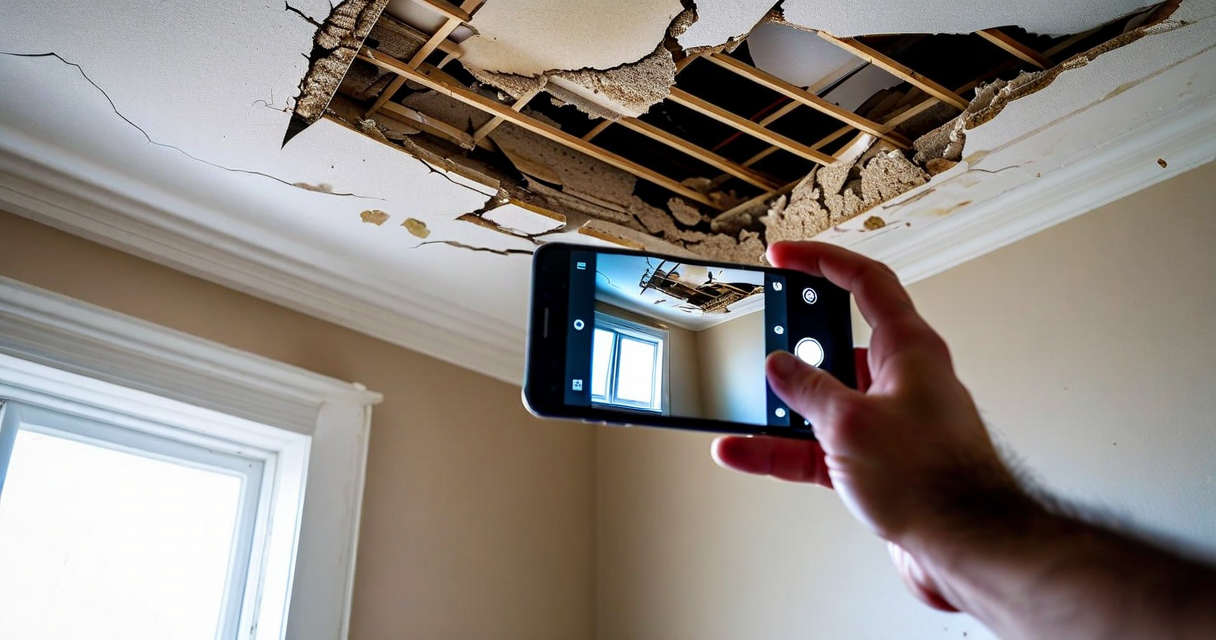
For any physical damage or theft: photograph everything before moving, cleaning, or repairing anything. Take wide shots that establish context (the room, the area) and close shots of the specific damage. Photograph from multiple angles. Timestamps on photos are your evidence that the damage was documented immediately after the incident, not reconstructed later. If your phone strips EXIF metadata when uploading to cloud storage, screenshot the photo with the timestamp visible.
For theft from a property: photograph any signs of forced entry from both inside and outside. Photograph windows, doors, and any other access points. If the police have been called and the scene has been examined, photograph after they leave but note their visit time and the crime reference number. The crime reference number is mandatory for theft claims — no insurer will proceed without it.
Proof of Ownership for Stolen or Damaged Items
This is where most claims run into difficulty. Adjusters require proof that the claimed item was genuinely owned by the policyholder, at approximately the stated value, prior to the incident. Without proof of ownership, the claim for that item fails — regardless of what the policy says about theft or loss.
The strongest proof of ownership is a purchase receipt that shows the item description, price, purchase date, and seller. Failing that: bank or credit card statements showing a transaction that corresponds to the claimed item (amount and approximate date must match), order confirmation emails, warranty registration emails (these often include the product name and serial number), and photographs of the item taken before the incident.
The photographs-before-incident point is worth dwelling on. A photo of a stolen laptop taken at a coffee shop two months before the theft, with the laptop's screen visible and trackable serial number on a sticker in the corner, is often more convincing to an adjuster than a receipt. This is especially true for electronics, jewellery, and watches — categories where value is highest and ownership documentation is most contested.
Start building this documentation now, before you need it. A monthly 10-minute photo audit of your valuable items, with images stored in cloud backup, is the most practical pre-claim preparation you can do. Rehuman's mobile app includes a policy companion feature that lets you attach photos of items to the relevant policy — stored securely alongside the policy document itself.
For Water Damage and Escape of Water Claims
Water damage is the most commonly disputed claim category at the FOS. The core dispute is almost always: was the damage sudden (a burst pipe) or gradual (a slow leak over time)? Sudden events are covered. Gradual deterioration is excluded.
Document the source of the water and the damage extent as immediately as possible. Photograph the affected pipes, joints, or appliances. If a plumber was called, get a written report that includes their diagnosis of the failure mode and an estimate of how long the leak had been running. A plumber's written report that says "acute fracture consistent with sudden failure under pressure" is strong evidence against a gradual deterioration finding by the adjuster.
If you have a buildings policy, check whether it requires you to use approved contractors for emergency repairs. Some policies void the repair claim if you use a contractor not on the insurer's approved list — a fact that is not commonly communicated at the point of crisis. Call the claims line before authorising major repair work.
For Motor Insurance Claims
After any road incident, regardless of fault: photograph the damage to your vehicle from all angles, including the registration plate visible in at least one shot. Photograph the damage to any other vehicle involved. Note the exact location (street name, approximate location, nearest junction or landmark). Note the weather conditions, road conditions, and time of day. Record the names, addresses, and insurance details of all other drivers — this information must be exchanged under the Road Traffic Act 1988.
If there are witnesses who are not involved in the accident, take their contact details. Independent witnesses are extremely valuable in fault-disputed claims. A witness statement from a pedestrian who saw the other driver run a red light changes the liability determination entirely.
Dashcam footage, where it exists, is decisive. The FOS and most insurers accept dashcam footage as primary evidence. If your vehicle has a dashcam, ensure the footage is downloaded before the memory card overwrites it — most loop recording dashcams overwrite after 24–48 hours depending on card capacity and recording resolution.
For Home Emergency and Temporary Accommodation Claims
If a damage event makes your home uninhabitable and your policy includes alternative accommodation cover, document the uninhabitable status before booking alternative accommodation. An adjuster's visit is ideal, but if the property is dangerous (structural damage, loss of utilities in winter), photograph the conditions and have a written note from the emergency services or a contractor confirming the property cannot be safely occupied.
Keep all receipts for alternative accommodation, meals, and necessary expenses incurred as a direct result of the uninhabitable status. Many policies cover "additional costs of living" rather than the full cost of living — the claim is typically the difference between what you're paying now (hotel plus food) and what you'd normally pay (home utilities and grocery bill). The calculation requires documentation of both. Without receipts, adjusters apply standard rate estimates that are typically lower than actual costs.
What to Include When Submitting Your Claim
When the claim form arrives (or the online submission portal opens), include everything in a single submission rather than adding documents piecemeal. A complete first submission is processed faster and sends a signal to the adjuster that the claim is credible and organised. Missing items in the initial submission create follow-up requests that extend the assessment timeline.
Write a brief timeline of the incident in your own words: what happened, when you noticed it, what you did immediately, when you called the police or emergency services (if applicable), what temporary measures you took. Keep it factual and specific. Adjusters handle dozens of claims simultaneously; a clear timeline that gets to the key facts in three paragraphs is more useful than a 10-page narrative.
After You Submit: The Adjuster Visit
For claims above approximately £2,500, most insurers will appoint a loss adjuster to inspect the property and assess the claim. The loss adjuster is appointed and paid by the insurer — they are not independent. You are entitled to appoint your own loss assessor to represent your interests at your own cost. For large or complex claims, a public loss assessor typically recovers their fee in a higher settlement.
During the adjuster visit: be present, have your documentation organised and ready to show, answer questions factually and concisely, and do not speculate about causes or pre-existing conditions unless you are certain. If the adjuster asks whether there was any pre-existing damage to the area affected, answer accurately. Misrepresentation voids the claim entirely under the Insurance Act 2015.
After the visit, request the adjuster's written report. You are entitled to it. Review it for factual accuracy before the claim settlement is issued. If the report contains factual errors that affect the settlement, write to the insurer specifying the errors and the documentary evidence that contradicts them.
Keep your policy documents and claim history in one place
Rehuman stores your policies securely and helps you prepare the documentation before any claim.
See the Platform